When the plan is too abstract to start.
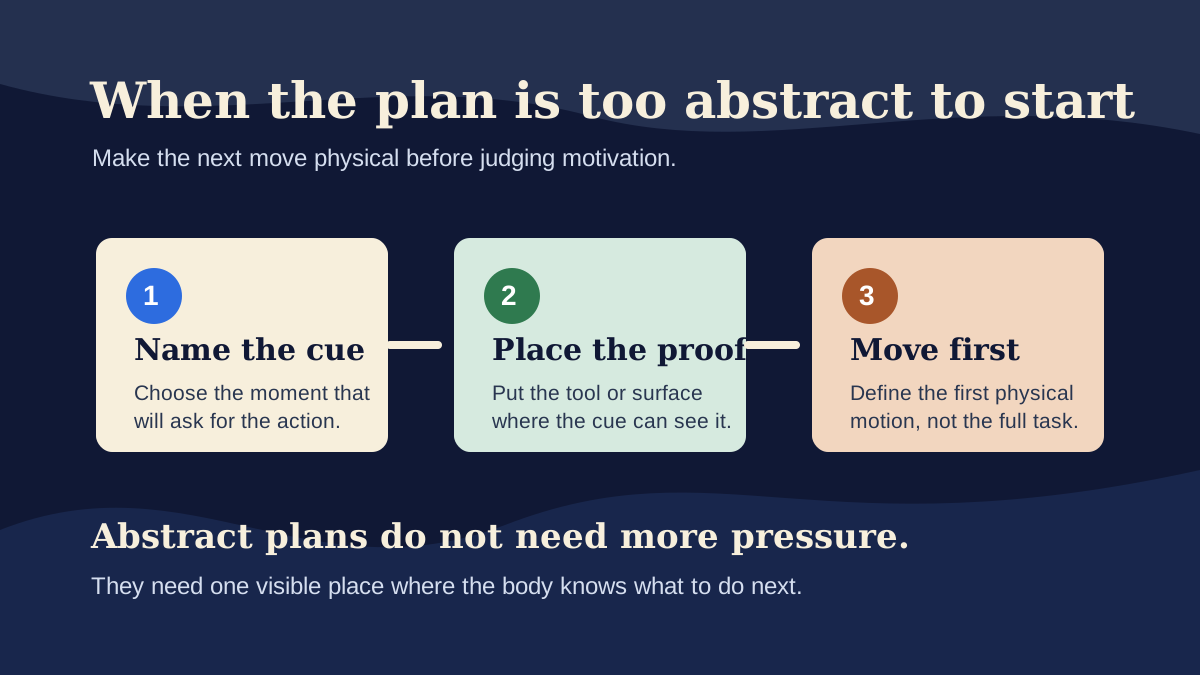
Answer first: make the next move physical. Name the cue, place the proof, and define the first motion before deciding whether the plan is working.
Quick answer
What should you do when a plan feels too abstract to start?
Translate the plan into a named cue, a visible place, and one physical first move so the next action is concrete before motivation is judged.
A plan can be true and still unusable. "Write more," "get fit," or "be consistent" may describe the direction, but none of them tells the system what to do when the moment arrives.
Start translation
An abstract plan needs a visible entry point.
The problem is often not resistance. It is missing translation. The habit needs one cue, one place, and one first movement that can happen before the mind starts negotiating.
- Name the cue
- Choose the exact moment that asks for the action: after coffee, after shutdown, before email, or when the shoes come off.
- Place the proof
- Put the document, notebook, shoes, ingredients, or checklist where the cue can see it.
- Move first
- Define the first physical motion: open the file, write the date, fill the bottle, clear the mat, or start the timer.
The abstract-plan check.
- Replace the identity verb. Turn "be consistent" into the concrete action the room can support.
- Make the setup visible. If the tool is hidden, the plan is still mostly an idea.
- Stop before the full task. The first move should begin the route, not prove the whole habit.
Why abstract plans create false motivation problems.
When a plan is vague, the first step becomes a private decision every time. That makes the useful action compete with email, fatigue, context switching, and the old default. The system may be willing, but it has no obvious handle.
In Compounding Momentum, a useful habit is not just an intention. It is an operating path. The cue, environment, belief, and review loop all have to make the next move easy enough to repeat.
The fix is deliberately unglamorous. Make the abstract plan local. Give it an object, a place, and a motion. Once the route exists, you can judge the load more honestly.
Practical examples
First moves that make the route usable.
- Writing: open the draft and write the next heading, not the whole section.
- Training: put on the shoes and start the warm-up timer, not the full workout.
- Reading: place the book on the chair and read one page at the normal cue.
- Planning: write tomorrow's first action on the card before closing work.
- Recovery: put the phone outside the bedroom and start the shutdown cue.
Connect the abstract plan to the right note.
If the problem is capacity rather than clarity, read when the week has no margin left. If the routine has become too rigid, read when consistency starts to feel brittle. If the useful route has gone quiet, read restart when the system goes quiet.
Use this script
The concrete-start rule.
Use this before a good intention becomes another open loop with no place to begin.
- The cue is...
- Name the moment that will ask for the action before the day gets noisy.
- The visible proof is...
- Choose the object or surface that makes the plan easy to notice.
- The first motion is...
- Define the smallest physical move that starts the route without requiring a full performance.
When the workbook helps.
A single vague plan can be fixed with the concrete-start rule. A repeated pattern needs a better implementation surface. The Companion Workbook helps when goals keep staying abstract because the cue, place, and first rep have never been designed together.
If you are still naming the layer, start with Chapter 1 and the Seven-Layer Audit before adding more structure.
Take the smallest useful next step.
If the plan feels too abstract, choose one route that makes the next move visible before you redesign the whole routine.